


FOREVER CHEMICALS IN YOUR MAKEUP BAG: THE HIDDEN DANGER OF PFAS IN COSMETICS

You probably don't think twice about your morning routine—a swipe of foundation, a coat of mascara, maybe some lipstick before heading out the door. But lurking in many of these everyday products is a class of synthetic chemicals that scientists call "forever chemicals," and their presence in cosmetics has become impossible to ignore.
What Are PFAS and Why Are They in Your Makeup?
PFAS—per- and polyfluoroalkyl substances—are a family of over 10,000 human-made chemicals developed in the 1950s. Their defining characteristic is a carbon-fluorine bond, one of the strongest in chemistry, which makes them extraordinarily resistant to breakdown. That resistance is precisely why manufacturers love them: PFAS make products water-resistant, long-wearing, and smooth to apply.
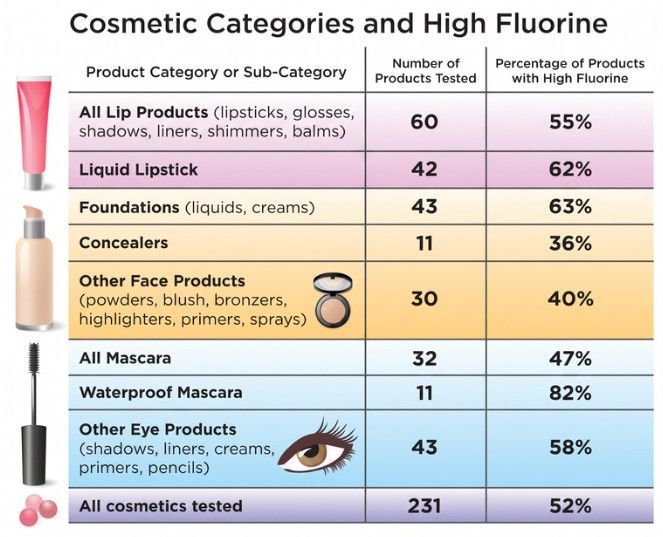
In cosmetics, you'll find them in waterproof mascara, liquid lipsticks, foundations, and other products designed to last all day. They help create that silky texture and keep your makeup from budging through sweat, humidity, or tears. The trade-off, however, is that these chemicals don't just persist on your skin—they persist everywhere.
Research from the Green Science Policy Institute and several universities found high fluorine levels—indicating probable PFAS presence—in over half of 231 popular makeup products tested. The chemicals were especially prevalent in waterproof mascara, liquid lipsticks, and foundations, often without any disclosure on the label.
The Health Concerns Are Real
PFAS don't just linger in the environment; they accumulate in our bodies. Studies have found these chemicals in the blood of virtually everyone tested, including newborns. Because many PFAS are both water- and fat-resistant, they tend to concentrate in the blood and organs rather than being flushed out.
The health risks associated with PFAS exposure are serious:
- Cancer: Some PFAS have been linked to kidney and testicular cancers
- Hormonal disruption: They can interfere with thyroid function and reproductive hormones
- Immune system effects: Research suggests reduced vaccine effectiveness in children with higher PFAS exposure
- Developmental issues: Studies have found associations with lower birth weight and smaller head circumference in babies born to mothers with elevated PFAS levels
- Liver and kidney damage: Chronic exposure has been connected to organ toxicity
The particular concern with cosmetics is the route of exposure. Products applied near the eyes and lips, or used daily over years, create cumulative exposure that may be more significant than occasional contact.
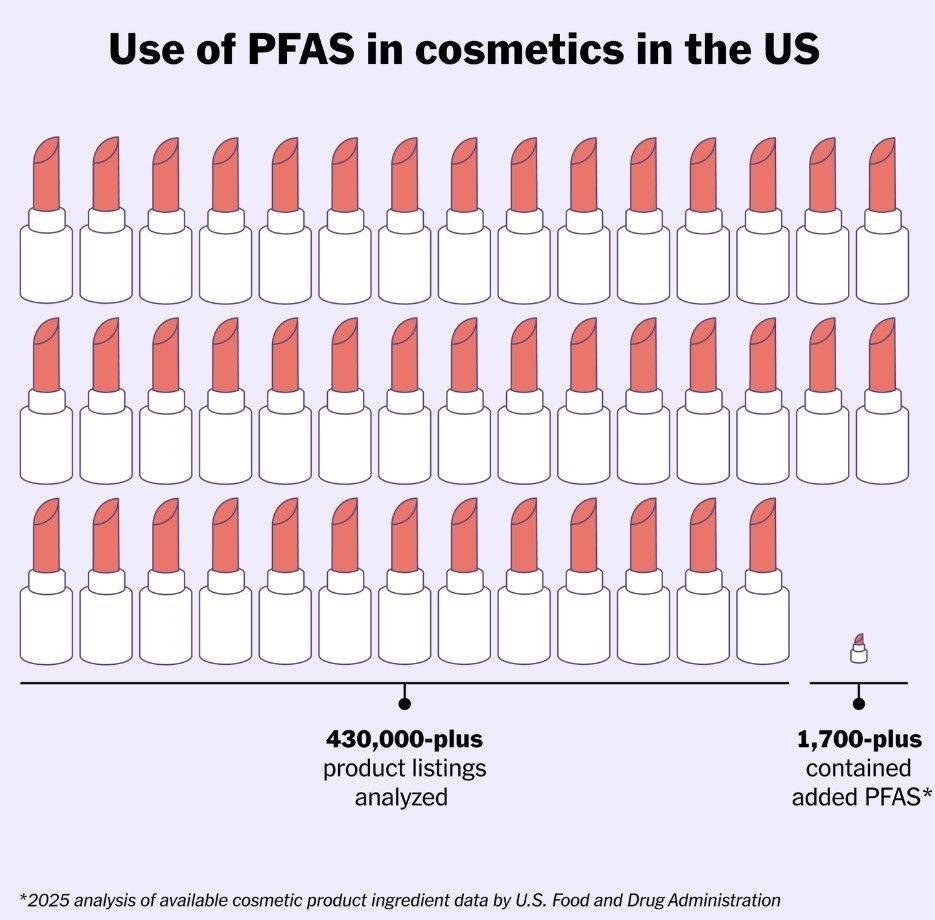
The FDA analyzed ingredients lists from cosmetics registered with the FDA and identified 51 PFAS (out of thousands that exist) used in cosmetics formulas; only 0.41% of the products contained them. NYT Wirecutter
What Is the FDA Doing?
In December 2025, the FDA released a congressionally mandated report on PFAS in cosmetics—the first comprehensive federal assessment of these chemicals in personal care products. The findings were sobering but unsurprising to those following the issue.
The FDA identified more than 50 PFAS ingredients intentionally added to approximately 1,700 cosmetic products currently on the market. But here's the critical point: the agency could not determine whether these chemicals are safe. The report cited significant data gaps, including limited information on how much PFAS is absorbed through the skin, a lack of dermal toxicity studies, and incomplete mechanistic understanding of how these chemicals affect human health.
FDA Commissioner Marty Makary stated plainly that "toxicological data for most PFAS are incomplete or unavailable, leaving significant uncertainty about consumer safety."
States Are Moving Faster Than the Feds
While federal action stalls, individual states have stepped into the gap. At least eleven states—including California, Colorado, Minnesota, and New York—have enacted laws restricting or banning intentionally added PFAS in cosmetics, with implementation dates ranging from 2025 to 2028.
California's ban took effect in January 2025, and industry reports suggest manufacturers are already reformulating products in response.
How To Protect Yourself
Until stronger regulations arrive, the responsibility falls on consumers to avoid PFAS. Here's how:
- Read ingredient labels carefully. Look for terms containing "fluoro," "perfluoro," or "PTFE" (polytetrafluoroethylene). Common PFAS in cosmetics include perfluorononyl dimethicone, polyperfluoromethylisopropyl ether, and tetrafluoroethylene.
- Use trusted resources. The Environmental Working Group's Skin Deep database and Healthy Living app can help identify products with PFAS. Products bearing the EWG Verified mark have been screened to exclude PFAS ingredients.
- Choose certified organic cosmetics. PFAS are completely banned in certified organic cosmetics, making organic certification a reliable shortcut.
- Be skeptical of "waterproof" and "long-lasting" claims. These are the product categories most likely to contain PFAS.
The bottom line: forever chemicals have no place in products we apply to our faces every day. Until regulators catch up, informed consumers remain the first line of defense.
(For more information about PFAS, see the August, 2023 and April, 2024 issues of The Goldhaber Warnings Report).