

MAHA OR MASA? WHEN HEALTH POLICY LEAVES SCIENCE BEHIND
“Make America Healthy Again” is an appealing slogan. Who could oppose it? But slogans are not evidence, and good intentions are not a substitute for science. The question Americans should be asking is whether the policies associated with the MAHA movement are actually making Americans healthier—or whether some are moving public health in the opposite direction.
There is a growing reason for concern.
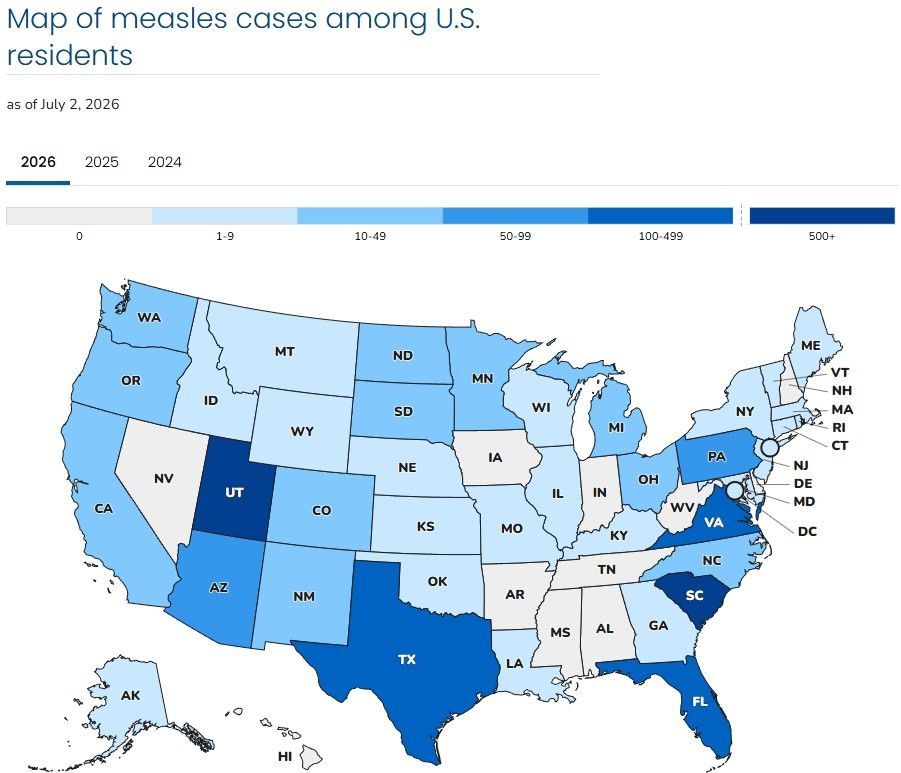
Consider measles. As of September 24, 2026, the Centers for Disease Control and Prevention had recorded 3,659 confirmed measles cases in the United States, with 95% associated with outbreaks. That is already substantially higher than the 2,289 cases recorded during all of 2025. CDC also reports that kindergarten MMR vaccination coverage fell from 95.2% in 2019–20 to 92.4% in 2025–26, leaving approximately 280,000 kindergarteners inadequately protected.
And measles is not merely an inconvenience. In 2025, three Americans died from measles—an unvaccinated adult in New Mexico and two unvaccinated school-aged children in Texas. CDC reported that 12% of U.S. measles cases in 2025 required hospitalization.
Against that background, changing the nation's childhood vaccination strategy deserves extraordinary scrutiny.
President Donald Trump signed an executive order in August 2026 establishing a new “Gold Standard Childhood Vaccine” framework. The order retains measles vaccination among vaccines recommended for all children, but it also calls for the MMR combination vaccine to be replaced, once individual products are available, with three separate shots and directs federal agencies to examine changing the timing and sequencing of childhood vaccines.
That distinction matters. The administration says its objective is greater parental choice, safety research and alignment with other developed countries. HHS describes the policy as a restoration of “gold-standard science.” But changing a long-established vaccination schedule is not itself evidence that the existing schedule was medically unsound. The scientific question must always be: What evidence demonstrates that the proposed change produces better health outcomes?
This is where Robert F. Kennedy Jr.'s history of controversial vaccine claims becomes relevant. Kennedy has built much of his public profile around allegations concerning vaccine safety that mainstream medical and public-health organizations have rejected. Once such claims become part of federal policy, the distinction between legitimate scientific skepticism and unsupported speculation becomes critically important.
Public health cannot operate on conspiracy theories. It requires randomized trials where appropriate, epidemiological evidence, pharmacovigilance, transparent methodology and independent replication.
Nor is vaccination the only area where infectious-disease threats remind us of the importance of competent public-health surveillance.
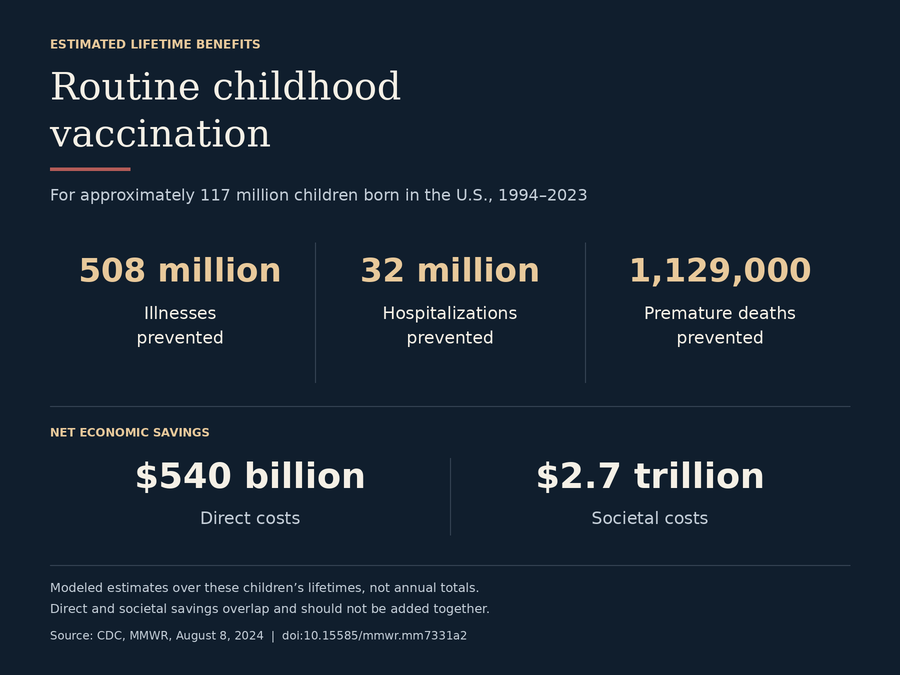
In 2026, the United States experienced a striking surge in cyclosporiasis, an intestinal illness caused by the parasite Cyclospora cayetanensis. CDC reported 19,883 laboratory-confirmed cases, 1,064 hospitalizations and two deaths between May 1 and August 31. Cases were reported in 49 states plus the District of Columbia.
And Ebola remains a reminder that infectious diseases do not respect political boundaries. In September 2026, CDC reported responding to a rapidly expanding Ebola outbreak in the Democratic Republic of Congo. Importantly, CDC said there were no cases associated with that outbreak in the United States and that the risk to Americans remained very low. The lesson is not that Americans should panic about Ebola. It is precisely the opposite: effective surveillance and infection-control systems are what allow public-health authorities to identify threats and keep relatively low-risk events from becoming American crises.
That is the central issue confronting MAHA.
There are legitimate public-health questions within the movement. Americans can reasonably debate ultra-processed foods, nutrition, food additives, chronic disease, conflicts of interest in medical research and the transparency of regulatory agencies. Some MAHA initiatives—such as efforts to increase disclosure surrounding substances manufacturers designate as “generally recognized as safe”—are policy questions that deserve serious examination rather than automatic dismissal.
But legitimate questions become dangerous when they are accompanied by unsupported conclusions.
America does not need less science. It needs better science communicated more honestly.
If MAHA means demanding rigorous research, greater transparency, better nutrition and stronger accountability, those objectives are compatible with mainstream public health. If it means treating unsupported vaccine theories as equivalent to decades of epidemiological evidence, weakening confidence in proven immunizations or changing medical recommendations before adequate evidence exists, then “Make America Healthy Again” risks becoming something quite different.
Call it MASA—Make America Sick Again—if that is where the evidence ultimately leads.
The test, however, should not be the slogan. It should be the data.
When preventable diseases return, when vaccination rates fall, when people are hospitalized or die, and when federal health policy departs from established medical evidence, Americans deserve something more than political rhetoric. They deserve policies grounded in reproducible science, transparent evidence and the basic principle that public health should first do no harm.